When showmanship and sportsmanship clashed in the USA vs India chess match
In a stunning turn of events at the Checkmate: USA vs India Chess exhibition match, Hikaru Nakamura famously picked up D Gukesh’s king and threw it into the crowd after winning, causing a stir in the chess community due to both the calibre of play and an overt act of theatre. Instead of being a celebration or spectacle, the gesture sparked a heated debate that pitted the evolving “entertainment-style” model that this event embodied against concepts of decorum and respect.
Competition between the USA vs India Chess
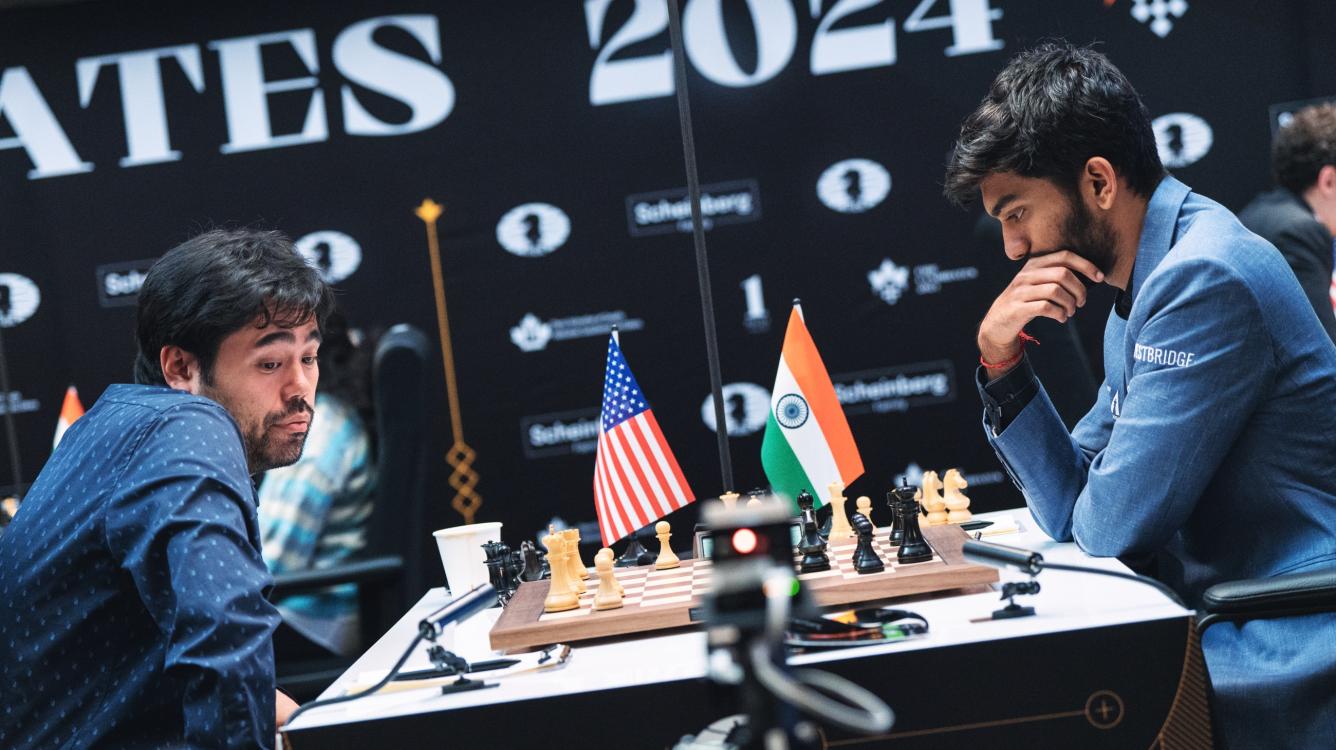
Checkmate: USA vs India Chess, or simply “USA vs India Chess,” was not your typical chess match. The event, which was held at Arlington, Texas’s Esports Stadium, was intended to be a spectacular extravaganza for spectators. Conventional ideas of silent, hushed halls were challenged; the audience was invited to applaud, jeer, and respond (as long as no real moves or secrets were yelled).
This hybrid identity was reflected in the format itself. Draw offers and resignations were suppressed (games were to be played out), time controls were accelerated (10 minutes per side with a special increment rule), and the event was infused with stylised introductions and dramatics.
Team USA dominated both on paper and in practice, defeating Team India 5–0 to end the first leg. As the top board player for India and the current world champion, Gukesh was paired with Nakamura, who was arguably the most well-known American in the lineup.
A king in flight between USA vs India Chess competition
The final matchup between Nakamura and Gukesh was the high point. In full theatrical mode, Nakamura raised his arms in a showman’s flourish after landing the decisive blow. He then reached over and grabbed Gukesh’s king piece, tossing it high into the applauding crowd. Online videos show Gukesh’s stunned expression as he watched his king sail away.
Some saw the gesture as bold, memorable, and daring—a symbol of chess eschewing tradition and embracing spectacle. Others saw it as an obvious case of disrespect, bad taste, and unbridled ego.


Defence & backlash: opposing viewpoints
The chess purists’ outcry
- Prominent chess experts were quick to voice their disapproval. Vladimir Kramnik, a former world champion, was especially harsh, describing the act as “tasteless,” “vulgar,” and a “degradation” of the sport. He underlined that it is offensive and provocative to toss an opponent’s king, which is the central piece in chess symbolism, in a celebratory toss, particularly when the opponent is a world champion.
- Others called it an insult to the honour of the game or “bad sportsmanship.” Concern that such theatrics could undermine respect for chess as a cerebral, disciplined game was expressed in a number of articles and social media posts.
Internal defence
- Defenders, however, also surfaced. The U.S. contingent’s Levy Rozman (GothamChess) clarified that the king-toss was actually prearranged by organisers as a component of the “entertainment angle.” According to his account, the players were instructed to permit dramatic gestures, theatrics, and even “breaking the king” as a show. “Without context, it will look like an unprovoked gesture,” he stated. However, we were urged to do that.
- In response to questions, Nakamura stated that the bullet/lightning speed format enhanced the dramatic atmosphere and that he had always planned to toss the king if he prevailed. According to reports, he later had a private conversation with Gukesh in which he explained that the act was intended as a show and not as a personal offence.
- Anish Giri and other chess celebrities defended the gesture as “playing to the crowd,” claiming that a more dramatic approach is appropriate for exhibition events of this nature.
Ukesh’s response: composed in the face of chaos
Gukesh’s poise was arguably the most remarkable feature. Gukesh did not react theatrically or publicly as Nakamura’s king sailed away. Rather than reacting in rage, he watched the event unfold with a wry, mildly amused expression. His poise and composure, particularly under duress and in the spotlight, won hearts throughout the chess community, according to observers.
According to reports, Gukesh did not publicly reprimand Nakamura or get involved in any controversy after he apologised to him backstage and explained that it was all for show.
The contrast between Gukesh’s calm silence and Nakamura’s flamboyant victory lap effectively served as a microcosm of the conflict in this event: between ego and restraint, spectacle and respect.
The significance of this moment for USA vs India Chess Competition


In addition to the outcome, the USA vs India chess match will probably be remembered for the drama and controversy it generated. Some conclusions:
1. The double-edged nature of chess as theatre
- The goal of the event was to make chess more theatrical by incorporating stage, audience participation, and dramatics. It was successful in one way: it created buzz, went viral, and made the news. However, it also highlighted the underlying conflict: at what point does entertainment take precedence over athletics? When does chess’s unique traditions get in the way of theatrics?
2. Making it harder to distinguish between sportsmanship
- The limits of sportsmanship are called into question by the king toss. Exuberant celebrations are normal—even expected—in a lot of sports. However, the foundation of chess has long been mutual respect, quiet tension, and intellectual rigour. Even in an exhibition, going over that line runs the risk of offending purists.
3. Athlete vs Actor: The Dual Faces of the USA vs India Chess Event
- Nakamura played a deliberate part in the entertainment narrative by making a gesture that read more like that of a performer than a rival. Gukesh, on the other hand, continued to be the athlete: composed, concentrated, and not overly reactive. In addition to highlighting persona differences, the juxtaposition also highlighted which style might best maintain the game’s integrity.
4. Norms are shaped by public reaction in USA vs India Chess
- Responses from spectators, pundits, and seasoned athletes are important. The criticism, which ranges from calling the act “vulgar” to urging decorum to be maintained, demonstrates how chess culture may be resistant to excessive showmanship. The extent of theatrics will probably be calibrated by future events. Would future tournament organisers allow or prohibit such gestures?
5. The moment’s legacy in USA vs India Chess
- The king toss has become a pivotal moment in this USA vs India chess match, even if it is dismissed as a “gimmick.” It solidified the match’s legacy in chess history. More significantly, it provoked discussion about what chess should be going forward: a spectacle, a contest, or a combination of the two.
In addition to Team USA’s decisive victory, the USA vs India chess match will be remembered as a spectacular clash between entertainment and tradition. Two opposing figures were positioned in the middle: D Gukesh, who took in the moment with composure and subdued dignity, and Hikaru Nakamura, who viewed the victory as a performance.
It was more than just a flourish when Nakamura threw Gukesh’s king into the crowd; it was a declaration that the distinction between spectacle and sport is being redrawn in this new era of chess. It remains to be seen if that statement will hold up or if criticism will temper it. What is certain, though, is that this match between the United States and India will go down as one of the more dramatic episodes in the history of chess’s development.