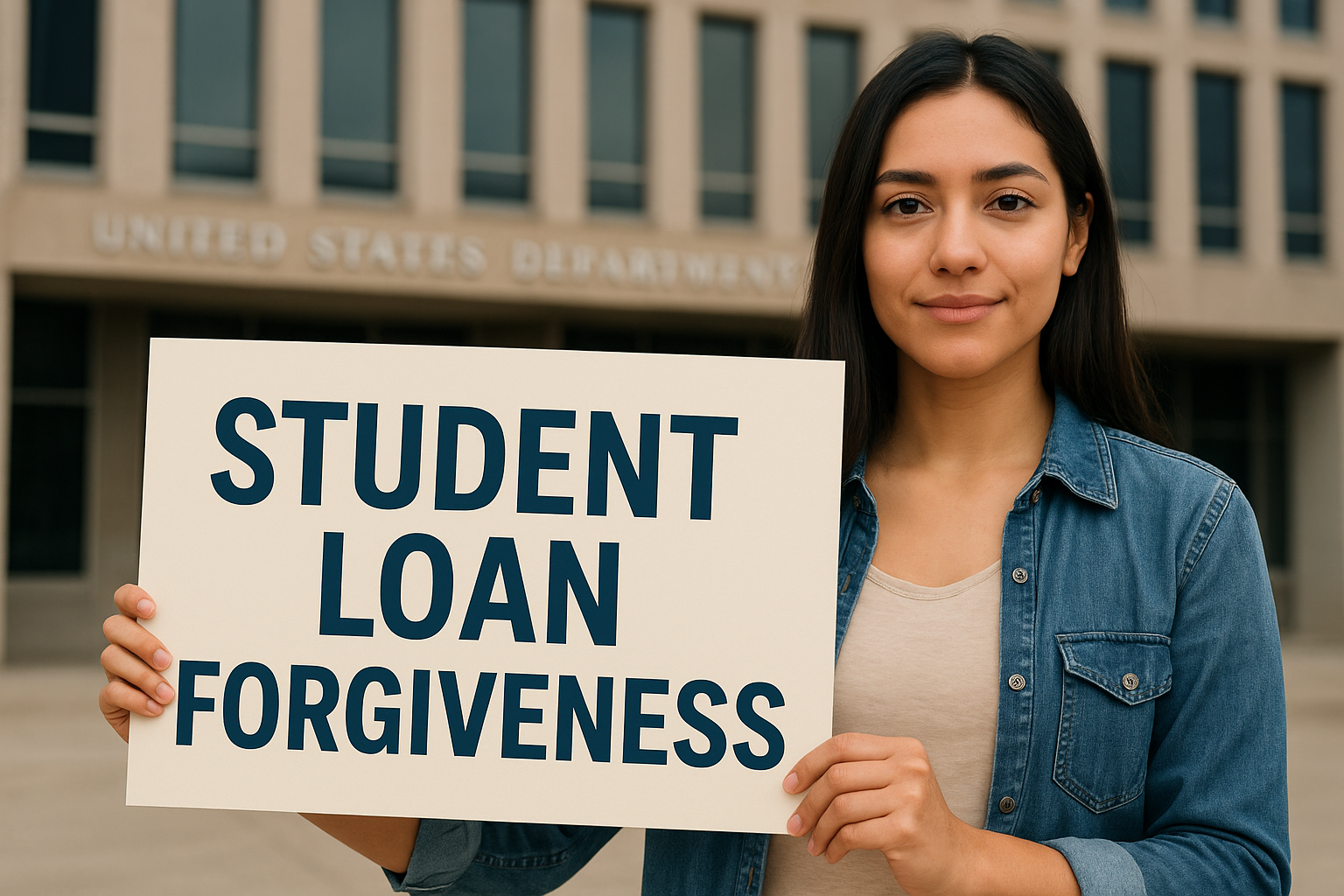
Finally, there is relief: millions of student loans will once again be forgiven. What It Means & How It Operates
Under a historic agreement between the American Federation of Teachers (AFT) and the US Department of Education (ED), the forgiveness of federal student loans for millions of borrowers is being resumed, marking a significant change in U.S. student loan policy.
Here’s all the information you need to understand how this resuscitation of student loan cancellation operates, who is eligible, the tax ramifications, and what to do if you have a federal student loan.


What took place with the forgiveness of student loans?
On October 17, 2025, the Department of Education and AFT came to an agreement to resume processing cancellations under a number of income-driven repayment (IDR) plans, including Pay As You Earn (PAYE), Income-Based Repayment (IBR), and Income-Contingent Repayment (ICR).
Many borrowers who had satisfied eligibility requirements for forgiveness were left waiting as a result of prior administrative and legal obstacles. In addition to addressing those delays, the agreement requires that relief be processed.
Crucially: Borrowers who become eligible for loan cancellation in 2025 will not owe federal taxes on the forgiven amount.
The Significance of Forgiveness of Student Loans
After 20 or 25 years of qualifying payments, these IDR plans provided a route to forgiveness for innumerable borrowers who had taken out federal student loans. Many have so far discovered that the process is either blocked or delayed.
One important advantage is the tax exemption; without it, the balances of forgiven loans might be considered taxable income, which would result in an unexpected tax bill. That risk is reduced thanks to this new agreement.
The move helps restore confidence in the federal student-loan system—for both borrowers and the institutions managing the programs.


Who Qualifies? forgiveness of student loans
must have completed the necessary number of qualifying payments and be enrolled in one of the IDR plans: IBR, ICR, or PAYE (or switching from paused plans).
The Public Service Loan Forgiveness (PSLF) program, which allows borrowers in the public sector to have their debt forgiven after ten years of qualifying payments, is also covered by the agreement.
Overpayments will be reimbursed to borrowers who were already eligible but continued to make payments after their eligibility period.
Check your eligibility by logging into your account on the federal student aid portal (StudentAid.gov) and seeing which plan you are enrolled in, which payments are considered, and if you have reached the forgiveness threshold.
Information on taxes and the timing of student loan forgiveness
The tax benefit is that the amount of loans forgiven in 2025 is not included in federal taxable income. For borrowers whose relief might otherwise result in tax liability, this is a significant event.
Time is important: After October 21, 2025, many discharges start to be formally processed. For updates, borrowers should keep an eye on their loan accounts.
State taxes might still be owed: Some states may have different rules regarding forgiven debt, despite the federal tax being exempt. State tax laws should be reviewed by borrowers.


Actions Borrowers Should Take Right Away to Forgive Student Loans
Verify the status of your loan: Check your repayment plan and the quantity of qualifying payments you have made by logging in at StudentAid.gov.
Keep an eye out for official announcements: Your loan servicer will notify you via email or letter if you qualify for loan forgiveness. “You are eligible to have your student loan(s) discharged” could be the subject line.
Think about taxes: To learn about any ramifications, speak with a tax advisor if you reside in a state that handles forgiven debt differently.
Maintain documentation: Notifications from the ED or your servicer, payment history, and plan enrolment information may all be useful in the event of inconsistencies.
Have patience: It will take time to process forgiveness for millions of borrowers. Even though your account might not update right away, that doesn’t mean you’re not qualified.
The broader picture and possible difficulties with student loan forgiveness
Although this is a significant victory for borrowers, it is unclear how student loan policy will develop in the future. For example, reforms and caps on graduate student loans are proposed by the One Big Beautiful Bill Act, a significant spending and tax package, which may affect future borrowing and repayment options.
There are still legal and administrative issues because the system is complicated and various plans have been put on hold or changed in previous years. Borrowers need to be informed.
This relief might not be directly applicable to borrowers who are not in the United States (such as international students) or who have private loans; always verify your particular loan type and plan.