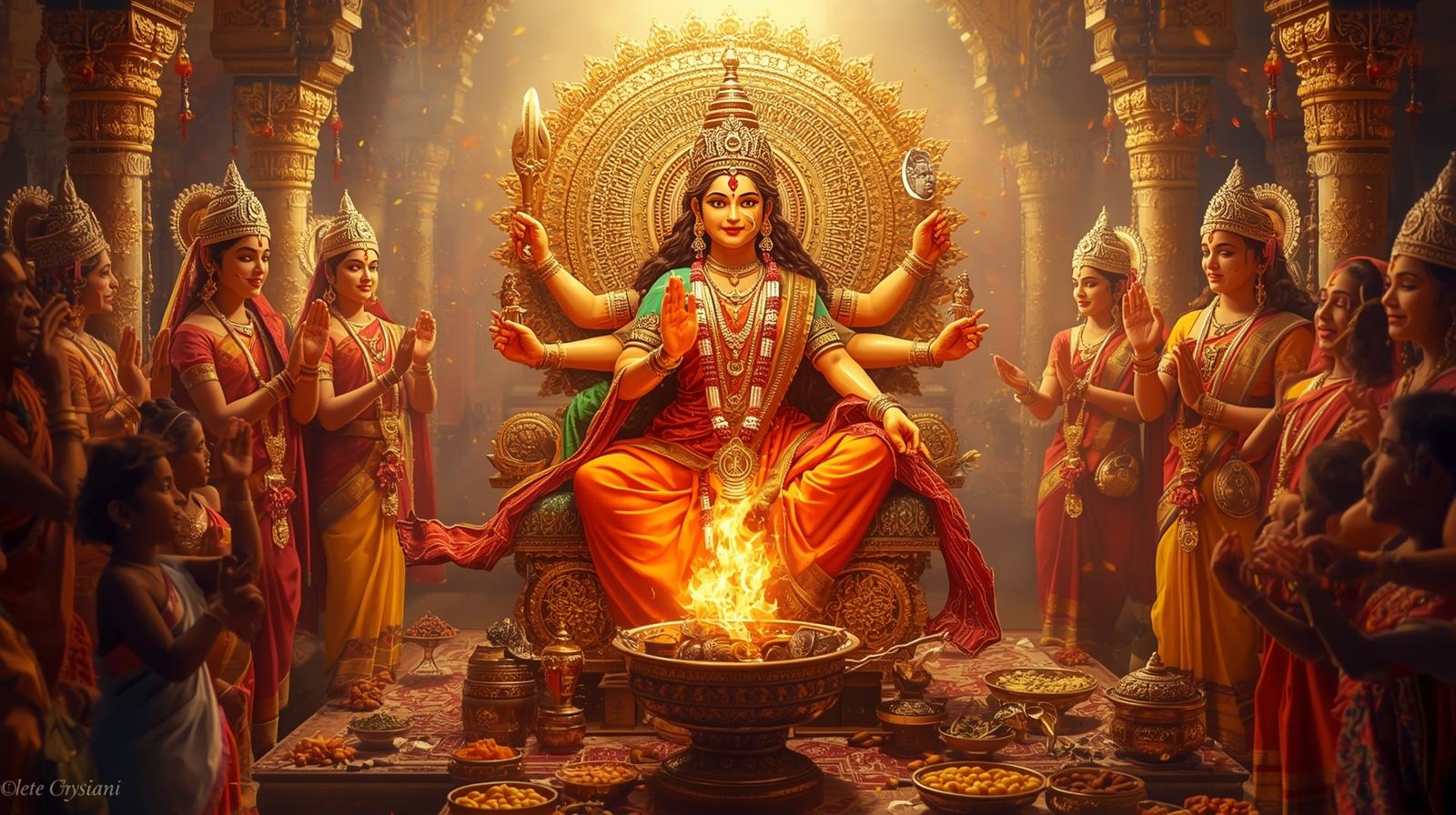
Maha Navami: Navratri’s Final Day: An Occasion of Victory, Devotion, and Cultural Magnificence
Maha Navami is the pinnacle of religious fervour, ritual, and communal celebration as the nine nights of Navratri come to an end. Maha Navami, the ninth and penultimate day of the Navratri festival, falls on October 1 in 2025.
Maha Navami has rich ritualistic traditions, profound mythological significance, and significant regional variation throughout India, making it more than just another day in the Navratri cycle. Maha Navami blends religious symbolism with communal celebration, from grand aartis and cultural processions to Ayudha/Astra Puja (worship of tools/weapons) and Kanya Pujan (worship of girls).
We examine the mythology, customs, regional variations, news stories, and changing trends surrounding Maha Navami in India.


Scriptural and Mythological Significance
Fundamentally, Maha Navami celebrates the final triumph of the divine feminine over the forces of evil. Hindu mythology states that on the ninth day following a nine-day conflict, Goddess Durga faces and defeats the demon Mahishasura, re-establishing cosmic order. Maha Navami is therefore frequently linked to the decisive conflict and the victory of good over evil.
Maa Siddhidatri, the ninth manifestation of the Goddess, is frequently worshipped on this day because it is thought that she grants followers “siddhis,” or spiritual abilities. The literal meaning of the name “Siddhidatri” is “goddess who gives success (siddhi).”
This day marks the final slaughter of Mahishasura in numerous scriptural and Puranic stories; according to some traditions, the battle ends precisely at the juncture (Sandhi) between Ashtami and Navami.
Another perspective: Saraswati Balidan, the ceremonial farewell to Goddess Saraswati, who is worshipped during Navratri, is occasionally linked to Maha Navami.
In the Navratri journey, Maha Navami thus holds a special place in terms of spirituality, symbolism, and ritual.
Maha Navami customs and rituals
A diverse array of customs are performed in residences, temples, and public spaces on Maha Navami. Key observances that are frequently connected to the day are listed below:
1. Kanya Puja or Kanya Pujan
- Kanya Pujan, also known as Kumari Puja, is one of the most popular and well-known rituals. Young girls, usually between the ages of two and ten, are revered as living representations of the Goddess on this day. They receive gifts, bhog (food), dakshina (monetary offerings), tilak, and foot washing.
- The ceremony honours the purity of children, respects feminine divine energy, and elevates the girl child as a representation of Shakti.
- The India Times article from 2025 details the auspicious times for Kanya Pujan on October 1st, along with the rituals of foot washing, tilak, halwa-poori-kale chana bhog, giving gifts, and asking for blessings.
2. Worship of Tools and Instruments, Ayudha Puja, and Astra Puja
- Maha Navami (or the days that follow) is also known as Ayudha Puja (worship of implements, tools, vehicles, and instruments) or Astra Puja (worship of weapons) in many parts of India, particularly in the south and among artisan communities.
- Anything that people use for their livelihood, such as books, pens, musical instruments, machinery, computers, and cars, is cleaned, adorned, and worshipped in order to call upon Goddess Durga’s blessings for prosperity and security.
3. Mahapuja & Aarti / Shodashopachar
- In an intricate 16-step worship ritual known as Shodashopachar Puja, devotees offer flowers, incense, lamps, and recitations to Durga or Siddhidatri.
- In the evening, many temples host a grand Maha Aarti, drawing sizable crowds for lamp lighting, conch blasts, and devotional singing.
- Offerings of ghee, grains, sesame seeds, and medicinal herbs are frequently made during a Homa (fire ritual). According to certain customs, on Navami, the entire 700-verse Durga Saptashati is recited in a chandi homa.
4. Prasad Distribution & Bhog Offering
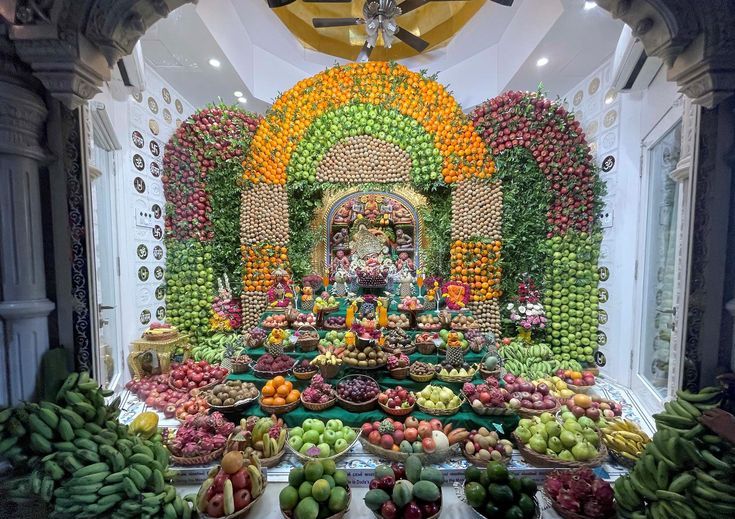
- Halwa, poori, black chana (kale chane), fruits, sweets, and other sattvic dishes are typical dishes of the special Navami Bhog.
- The prasad is given to the community, visitors, and devotees after being offered to the Goddess.
5. The Ninth Coconut Ceremony and Breaking of the Coconut
- To represent victory and the removal of barriers, devotees in certain temples break one or nine coconuts.
6. Local and Distinct Customs
- The Sandhi Puja (junction moment), a powerful ritual performed between Ashtami and Navami in Kolkata, Bengal, is regarded as a spiritually potent moment.
- As part of elaborate ceremonies, Mysore’s royal tradition includes processions and the worship of swords, or Astra Puja.
- Some customs use “totkas” for prosperity on Maha Navami or kadi, or small shells (kori/kadi), for auspicious remedies.

Date, Times, and Trends of Maha Navami in 2025
1. Date and Tithi
- October 1st is Maha Navami in 2025.
- From September 30 at 6:06 PM to October 1 at 7:01 PM, Navami Tithi takes place.
2. Lucky Times & Muhurats
- Vijaya Muhurat (Ayudha Puja): approximately 2:09 to 2:57 p.m.
- Kanya Pujan early morning muhurat: prior to sunrise
Central and Western India (Maharashtra, Madhya Pradesh, and Gujarat)
- Garba and Dandiya nights are synonymous with Navratri in Gujarat. The dance energy peaks by Maha Navami, and there are still plenty of big parties, city-level garba events, and indoor locations (to avoid bad weather).
- Pandals frequently host Durga Puja and associated celebrations in cities like Gandhinagar and Ahmedabad, with lavish decorations and public aartis on the ninth day.
East India (Assam, Odisha, and West Bengal)
- One of the most spiritually charged occasions in Bengal is the Sandhi Puja, which is performed at dusk between Ashtami and Navami.
- Following Maha Navami, the Goddess’ immersion (Visarjan) and Vijayadashami/Dashami preparations pick up speed.
- Navami is celebrated in Odisha and Assam with devotional songs, bhog, and communal aartis.
Andhra Pradesh, Telangana, Kerala, Tamil Nadu, and Karnataka are all in South India.
- Tools, cars, and machinery are worshipped during Ayudha Puja, which is occasionally held on or near Maha Navami.
- The ninth day may also see last-minute rites in many southern homes before the Navaratri tableau, or “golu/doll arrangements” in Tamil Nadu, is taken down.
- Sword worship, temple rituals, and royal processions are all part of the tradition in Karnataka (such as Mysore).

Other Areas and Hybrid Methods
- Maha Navami is frequently celebrated with public mandaps, dance contests, cultural events, and sizable community pujas in both urban and diasporic communities.
- Many areas place a strong emphasis on nightly devotional concerts, communal prasad distribution, and charitable feeding.
Current Dynamics and Difficulties
- Weather contingencies: To maintain continuity during rainy or severe weather seasons, organisers are moving the locations of Garba and puja indoors or under domes, as in Surat.
- Public safety and regulation: As huge crowds assemble for processions, aartis, and Garba, police initiatives like “Durga Marshals”—female constables on patrol—are being implemented in cities to ensure women’s safety, particularly during late-night events.
- Transportation & accessibility: To help pilgrims visit temples like Dongargarh during Navratri, the state government of Chhattisgarh has launched free bus services. This is especially advantageous on days like Maha Navami.
- Media and digital engagement: Maha Navami pujas and aartis are being broadcast on television, social media livestreams, and community apps to enable remote participation.
- Combining tradition and innovation: To appeal to younger audiences, some organisers combine traditional rituals with modern performance art, dance fusion, light shows, and music.