Truth, Bias, and the New Knowledge War in Elon Musk’s AI Encyclopaedia Grokipedia: A Rival to Wikipedia
The launch of Grokipedia, an AI-powered online encyclopaedia from xAI (the artificial intelligence company founded by Elon Musk), is a significant event in the digital realm of knowledge sharing today. Public records indicate that Grokipedia launched on October 27, 2025.
What is it?
Grokipedia is marketed as an encyclopaedia created by xAI using artificial intelligence. The suffix “-pedia” indicates the encyclopaedia intention, and the name itself seems to be derived from the company’s chatbot Grok (grok = “to understand deeply”).
Here are some important details:
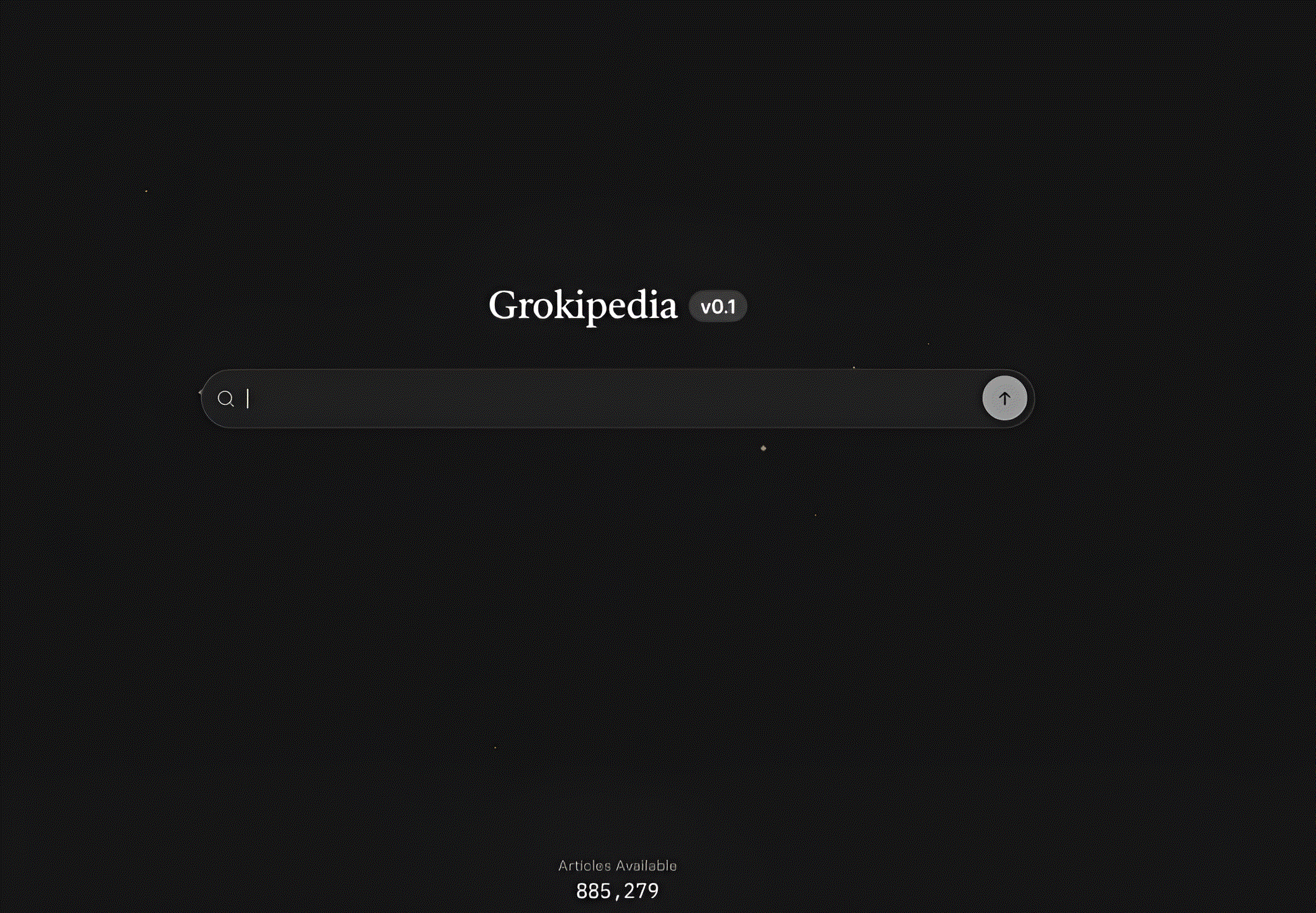
- It reportedly had between 880,000 and 900,000 articles when it launched (around October 27, 2025), which is a lot less than the roughly 7 million+ articles on the English Wikipedia.
- It is referred to as an early release, version “0.1.” According to Musk, version 1.0 will be “ten times better.”
- Numerous articles seem to be based on Wikipedia entries, sometimes almost exactly, with the AI editing layer applied on top.
- According to Musk and xAI, the goal is to build “the truth, the whole truth and nothing but the truth.” He says Grokipedia will fix Wikipedia’s “editorial bias.”
What Are the Differences Between Wikipedia and Grokipedia?
| Feature | Wikipedia | Grokipedia |
|---|---|---|
| Content creation model | transparent, volunteer-driven, crowd-edited revision history. | represents the controlled environment of xAI; it is AI-generated (using the Grok model), with fewer human editors (at least publicly). |
| Scale at launch | English-language articles in the millions. | Launched with less than 1 million (~880k-900k). |
| Claimed objective | All people should have free knowledge; neutrality is the goal. | Reducing or eliminating “propaganda” and perceived bias is the goal; Musk says Wikipedia is “broken.” |
| Transparency / sourcing | Talk pages, edit histories, and community governance are all features of articles. | As far as governance goes, Grokipedia is less transparent; the use of AI raises concerns about bias and sources. |
| Bias/agenda concerns | has long faced criticism for institutionalised political and cultural bias. | already faces criticism for favouring particular viewpoints, selectively omitting information, and having ideological biases. |


Important Points & Debates
1. Dependency on information from Wikipedia
Many of Grokipedia’s entries, according to observers, seem to be heavily lifted from Wikipedia, which raises concerns about originality, licensing, and whether the AI is actually “improving” or merely repackaging preexisting content.
2. Ideological inclinations and bias
There are instances where Grokipedia entries seem to promote more conservative or right-leaning viewpoints, according to critics (most notably tech publications like WIRED). For example:
- According to reports, the entry for “transgender” refers to “biological males” and uses terms like “transgenderism” in ways that are typical of particular ideological viewpoints.
- The entry for “pornography” made the widely criticised claim that it made the AIDS crisis in the 1980s worse.
- A few political and historical entries are presented in terms of selective omissions and media bias.
Is Grokipedia truly impartial? Who decides what constitutes the “truth”? And how will corrections and updates be handled?
3. Issues with versioning and quality
Grokipedia is only version 0.1, so xAI admits that it is still in its early stages and “not perfect.” “Will be a massive improvement over Wikipedia,” Musk wrote in his own tweet. However, change takes time, and the rate of deployment might surpass the rate at which the quality of the content matures, which is crucial for encyclopaedia trust.
4. Supervision, editing, and governance
Grokipedia’s public domain governance model is much less clear than Wikipedia’s community-governed editing model:
- Who makes the edits?
- How are mistakes identified and fixed?
- How open is the history of revisions?
Most of these questions are still unanswered.
The Significance Particularly for Information Seekers
- Alternative ecosystem of knowledge: For many years, Wikipedia has been the dominant encyclopaedia in the field. Competition is brought about by Grokipedia, which increases choice but also fragments sources.
- AI in the production of knowledge: A real-world example of how large-scale AI models could produce reference content is Grokipedia. This could change the way knowledge is created, curated, and accessed if it is successful.
- Verification, bias, and trust: The issue of bias is made even more pressing by AI-generated knowledge. Users need to learn to be more selective when it comes to perspective, oversight, source, and verification.
- Language scope and localisation: Upon launch Grokipedia is small and primarily in English. It could change the accessibility of knowledge globally if it spreads to many languages, but it could also bring about localised ideological differences.
- Impact on education: It will be up to educators, librarians, and students to decide whether to rely on Wikipedia, Grokipedia entries, or perhaps more conventional academic sources.

Looking Ahead: Possibilities and Difficulties
Prospects
- Possibility of quicker updates: Compared to slower community-edit models, Grokipedia may react to new events, subjects, or developing knowledge more quickly because it is AI-driven.
- AI-related structured knowledge: Organisations such as Grokipedia could function as organised knowledge bases that feed chatbots, search engines, and other AI systems.
- New developments in reference publishing: More tools, richer media, and real-time updates could advance the encyclopaedia and reference publishing industry as a whole.
Difficulties
- Speed versus quality: The temptation to scale quickly can result in mistakes, articles that are too superficial, or nuance that is missed.
- Agenda risk and bias: Trust is damaged if the AI model unintentionally or purposely reflects the biases of its designers.
- Corrections and governance: Who keeps an eye on the watchers? It matters how mistakes are identified and corrected.
- User trust and competition: Users will probably compare entries side by side (Wikipedia vs. Grokipedia) and make their decision based on transparency, familiarity, and trust.
- Originality, derivation, and licensing: There might be problems with licensing or credibility if a large number of articles are just copies of Wikipedia.