Supplemental Nutrition Assistance Program (SNAP) and Government Shutdown
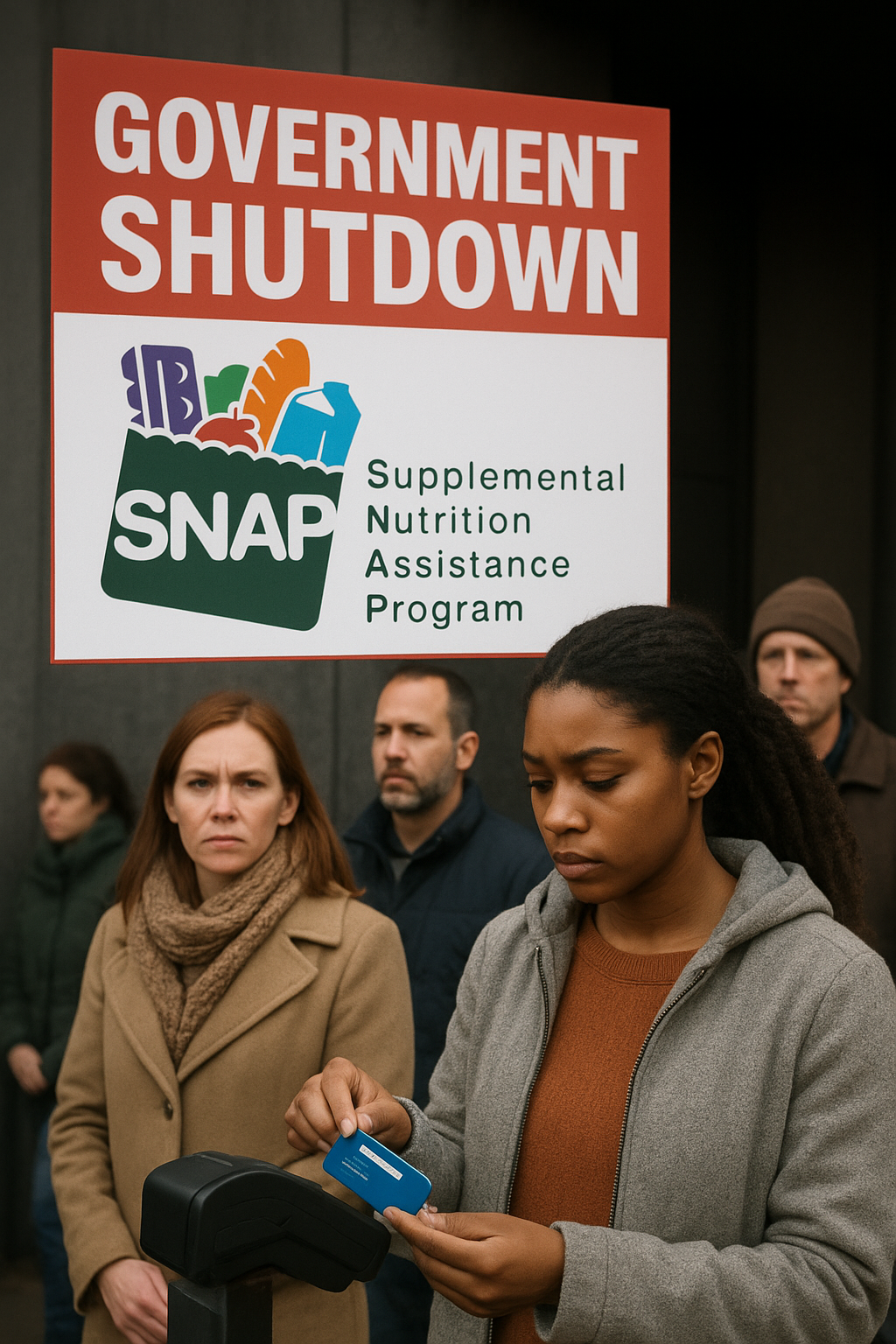
Concerns have been raised about the future of the Supplemental Nutrition Assistance Program (SNAP) due to the ongoing federal government shutdown in the United States, which began on October 1, 2025, and is currently the longest in recent history. A significant portion of the population, particularly low-income families, children, the elderly, and those with disabilities, would be impacted by any disruption, as approximately 42 million Americans depend on SNAP’s monthly food assistance benefits.
Here is a thorough explanation of the government shutdown effects on SNAP, including what recipients should know, state-by-state effects, and possible repercussions.
Why a Government Shutdown Is Important and How SNAP Is Funded


The Food and Nutrition Service (FNS) of the United States Department of Agriculture (USDA) is responsible for administering the federal program known as SNAP. After receiving federal funding, states use Electronic Benefit Transfer (EBT) cards to distribute benefits to qualified households.
Many programs typically halt or run on contingency funds during a government shutdown, which occurs when Congress fails to pass appropriations bills. However, SNAP can continue for a limited time due to state-administered mechanisms and some advance funding. For instance:
- According to USDA, during the current government shutdown, SNAP “has funding available for benefits and operations through the month of October.”
- Although future months are uncertain, the state of New York’s guidance confirms that SNAP benefits will be paid “as normal” in September and October of 2025.
- While October payments are safe, a government shutdown that lasts longer than expected could put November payments at risk, according to a non-profit analysis by the Food Research & Action Centre (FRAC).
Current Events: Government Shutdown (October 2025)


Benefits of October 2025
Since funding had been organised and allocated before the shutdown, it is anticipated that the majority of recipients will receive their October SNAP payment as usual.
Alert for November and later
USDA has warned states that there will probably not be enough money to pay full SNAP benefits for November if the government shutdown persists.
- Officials in Texas warned citizens that they might not receive their November SNAP checks if the government shutdown continues past late October.
- In a similar vein, Minnesota advised counties and tribal nations to postpone sending vendors their November issuance files.
- The administration of Pennsylvania issued a warning that SNAP payments totalling more than $366 million per month might be suspended.
- “Given the operational issues… we are compelled to direct States to hold their November issuance files and delay transmission to State EBT vendors until further notice,” reads a letter from USDA to state agencies.
Government shutdown delays for new enrolment and applications
New applicants or households with a change of eligibility may experience longer processing delays, even though current recipients may continue to receive payments for the time being. State agencies might have fewer employees or experience a lack of federal funding.
Affected other supporting services
Related programs such as the Special Supplemental Nutrition Program for Women, Infants, and Children (WIC) are also at risk of short-term funding exhaustion, in addition to SNAP.
The Significance of This Government Shutdown

Risk of food insecurity
The foundation of America’s food-assistance safety net is SNAP. An estimated 42 million people depend on it every month.
If benefits are reduced or postponed:
- Given that food prices are still high, many families will experience immediate hardship as they have less money to spend on groceries.
- Demand will rise for food banks and nonprofits.
- There are fewer options for households that are already at risk, such as those with children, elderly people, or people with disabilities. Millions of older adults depend on SNAP and could be negatively affected, according to the nonprofit AARP.
Economic repercussions
- The money that low-income households receive from SNAP quickly finds its way into local grocery stores and businesses, offering a small boost to the economy. Families, local companies, and commodity supply chains would all suffer from a disruption.
strain on the state budget
- States may have to make the tough decision to either watch benefits end or fill in the gaps, if they can. Some states just lack the means to backfill federal SNAP funding. For example, according to New York’s guidelines, the state is not allowed to pay for the federally funded part of SNAP.
Humanitarian and political issues
- The government shutdown effects on SNAP bring to light a larger issue: the most vulnerable frequently suffer when federal funding stops. Interrupted food assistance is unacceptable to states, social service advocates, and recipients. Governor Kathy Hochul of New York, for instance, blasted federal inaction as “holding SNAP benefits hostage.”
What Recipients Need to Know About the Government Shutdown

- Anticipate your October benefit — October payments are currently planned according to schedule.
- Keep an eye out for updates regarding November— The main warning is that November benefits might not be fully funded or may be delayed if the government shutdown lasts past late October. States will update their websites and send notices.
- Use your EBT card normally— You can keep using benefits at approved retailers unless your state or vendor instructs you otherwise.
- Lan ahead –If you can, think about adding food resources (food banks, community programs) or budgeting for a possible gap.
- Maintain open lines of communication and documentation —Be prepared for potential delays if you’re applying for SNAP for the first time or renewing your eligibility; keep in contact with your local SNAP office.
- Verify state-specific instructions–Notices may be sent by any state. Tennessee, for instance, published the following guide: “Benefits for October were issued as normal.” However, benefits for November might not be provided if the federal government shutdown persists.
- Speak up and keep yourself updated–For updates, follow nonprofit advocacy groups and contact your local and federal representatives to express your concerns.
The Reasons Behind the Government Shutdown and Why SNAP Is Under Attack
Context of the Shutdown
- After continuing resolutions stalled and Congress failed to pass full-year appropriations legislation for FY 2026, the federal government shut down.
- Many federal operations are consequently subject to “lapse in appropriations” circumstances.
Why SNAP funding is insecure
This built-in buffer is only temporary, even though SNAP is partially funded in advance. Agencies are forced to use their reserves or postpone work if a shutdown lasts longer.
- States have been instructed by USDA to wait until further notice before sending November benefit files to EBT vendors.
- If federal funding is reduced, states that oversee SNAP approval, issuance, and monitoring may experience problems with vendor licensing or state budgets.
Pressure is increased by recent policy changes.
- The One Big Beautiful Bill Act would tighten eligibility and work requirements and place a greater financial burden on states.
- Funding cuts have been made to SNAP-related food assistance-service programs, such as food banks and outreach.
Why This Is Important, Particularly Given the Government Shutdown
- Pressures from the seasons: Food insecurity usually increases as the holidays draw near; a SNAP disruption now could have greater consequences.
- High dependence: For groceries, millions of households rely on SNAP as their main or only safety net.
- The price of food: Food inflation is still high, so any cutback or postponement is more painful.
- Stressed state budgets: Since many states are already dealing with tight budgets following the pandemic, state backup funding is unlikely.
- Mitigation of hunger and national security: Food banks and nonprofit organisations are strained by delayed benefits because they might not be able to handle a significant increase in demand.
Takeaways for Advocates and Policymakers on Government Shutdown
- The lag effects on programs like SNAP can cause food insecurity, economic stress, and state fiscal crises, so policymakers need to realise that a shutdown is more than just a “pause.”
- States must have backup plans in case SNAP is disrupted, including vendor agreements, clear communication with recipients, and emergency financial and legal frameworks.
- Community and nonprofit organisations (meal programs, food banks, etc.) should get ready for the surge in demand.
- The recipients themselves gain from awareness by planning appropriately and understanding that while current payments may arrive, future months are unpredictable.