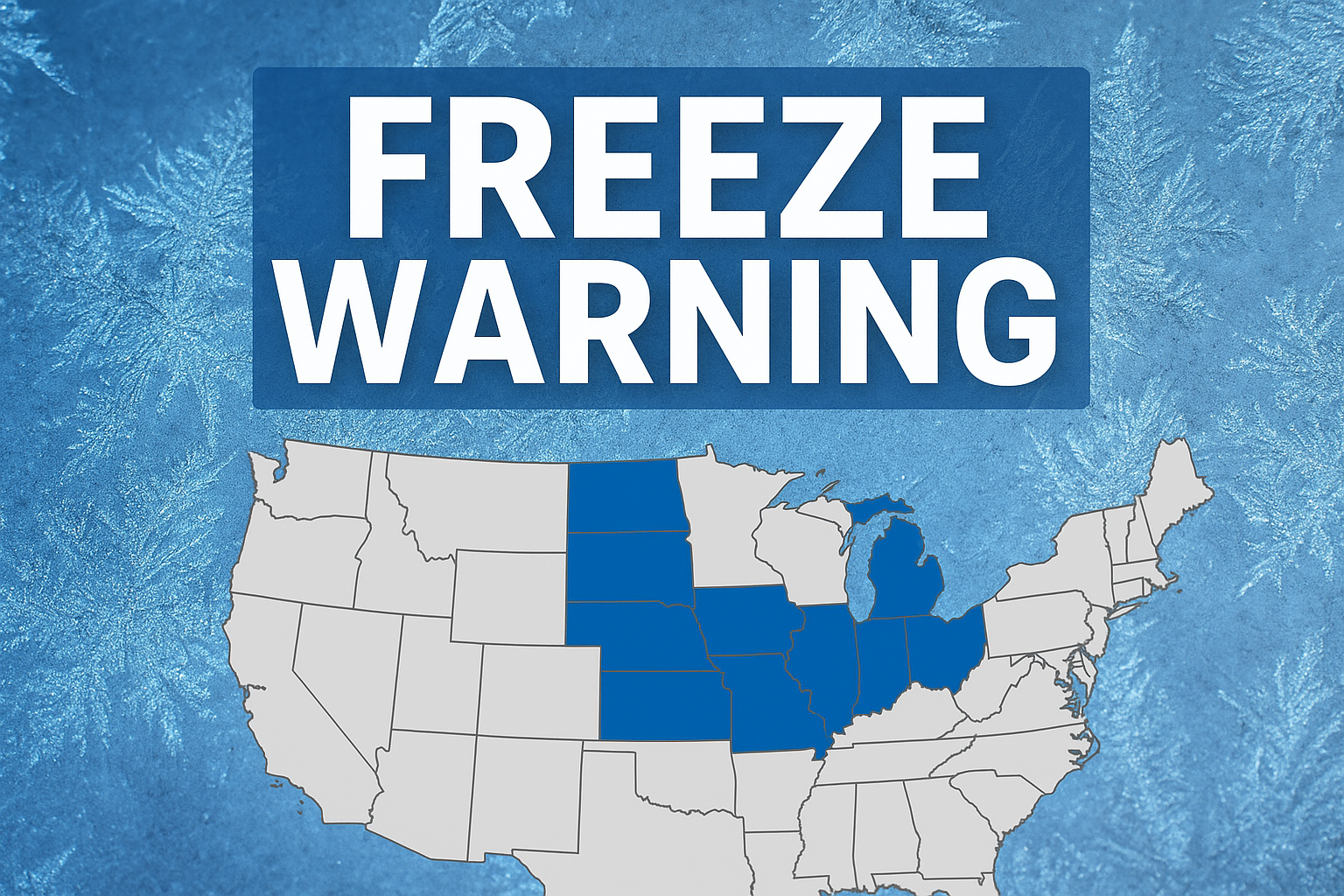
Midwestern Freeze Warning: Subfreezing Temperatures Endanger Homes, Plumbing, and Crops
A severe cold snap has prompted a wave of Freeze-Warning alerts across much of the United States, with overnight temperatures predicted to drop into the 20s and lower 30s °F (-3 °C to 0 °C). Growers, homeowners, and anyone else with exposed pipes or delicate vegetation are becoming alarmed by the early-season cold.
What’s going on, freeze warning
As temperatures drop into the 20s overnight and into Thursday morning, states in the Midwest and portions of the Plains are under freeze warnings, according to a recent analysis.
- Lows of 26 to 32 degrees Fahrenheit are predicted for parts of Iowa, Illinois, and Nebraska.
- A freeze watch is anticipated for Friday morning, and a frost advisory is already in effect for Thursday in northeast Ohio and the Tri-State area surrounding Cincinnati.
- In the meantime, the National Weather Service (NWS) has made its cold-weather warnings simpler. Among other things, as of October 1, “Hard Freeze Warning” products have been combined into “Freeze Warning.”
Many crops’ growing seasons may be coming to an early end, and the next few days will be crucial for infrastructure that is susceptible to freezing.


The significance of the freeze warning
Regarding gardening and agriculture:
- A freeze warning indicates that temperatures at or below 32 °F are predicted for an extended period of time, which poses a risk of harm to crops, delicate plants, and vegetation. It is not just about cold air. In accordance with definitions from meteorology:
- When the temperature is predicted to drop below 32 °F for an extended period of time, a Freeze Warning will be issued. Crops and other delicate vegetation will perish under these circumstances.For farmers and gardeners, this frequently signifies the formal end of some crops’ growing seasons, and prompt action is required to cover, harvest, or otherwise safeguard plants.
For residences and facilities:
- Not just plants are at risk from freezing overnight temperatures. Sprinkler systems, exposed pipes, water hoses, and unprotected outdoor plumbing can all freeze and burst, resulting in expensive damage. “Freeze Warning” is one of the official alert types for freezing temperatures listed on the NWS website.
- Particularly in lower-lying areas, clear skies and calm winds frequently intensify frost formation, increasing the likelihood of hidden vulnerabilities.
For locals and day-to-day existence:
- Move delicate vegetation closer to warming walls or indoors, and cover potted plants.
- To lessen the chance of freezing, drain, insulate, or let outdoor pipes drip.
- Keep an eye on weather alerts so you don’t get caught off guard when the temperature drops in the early morning.
The precise location of the freeze warnings
- Midwest: Overnight temperatures in the 20s are predicted for several counties in Iowa, Illinois, and Nebraska.
- Upper Midwest/plains: This included a few counties in Nebraska.
- Tri-State/Ohio Valley: On Thursday, there was a frost advisory; on Friday morning, there was a freeze watch.
- East/Northeast: As the cold front approaches, earlier advisories and warnings of frost were issued.
Crucially, these warnings are not limited to isolated areas; the cold is widespread and spreading swiftly, which means that many people might not be ready.


How to react and get ready for a freeze warning
Vegetation and plants:
- Before the sun sets, cover delicate plants with blankets, sheets, or frost cloths to prevent plastic from getting on the leaves. Potted plants should be moved indoors or close to building walls. Before the freeze, lightly water the soil because wet soil retains heat better than dry soil. Cover roots with straw or mulch. Remove the covers after sunrise to prevent additional damage from condensation.
Water systems and pipes:
- In order to lower pressure, disconnect garden hoses, empty outdoor faucets, insulate exposed pipes, and let indoor faucets drip overnight in extremely cold temperatures. Verify that sprinkler systems are completely winterised.
Living in general:
- Verify that cars are prepared by checking tyre pressure and antifreeze. Make sure your outdoor pets have a warm place to stay. Pay attention to local alerts in case conditions change.
Farming:
- If at all possible, harvest susceptible crops and use frost/freeze protection techniques (low tunnels, row covers). The freeze warning indicates that some crops may be nearing the end of their growing season.
Remain vigilant:
- Check the media and local NWS offices for updates. Being ahead of the freeze event offers the best protection because the cold can quickly get deeper.


Why is it so cold early in the season? freeze warning
Forecasters predict clear skies and light winds overnight due to a powerful cold front and high-pressure system pushing arctic air southward, which is perfect for radiational cooling and the formation of frost and freeze. For example, several states already have significant freeze warnings, according to the Newsweek map.
Additionally, people may notice that alerts are worded slightly differently than in previous years due to the NWS’ recent “Hazard Simplification” changes, which involved renaming and combining warning types.