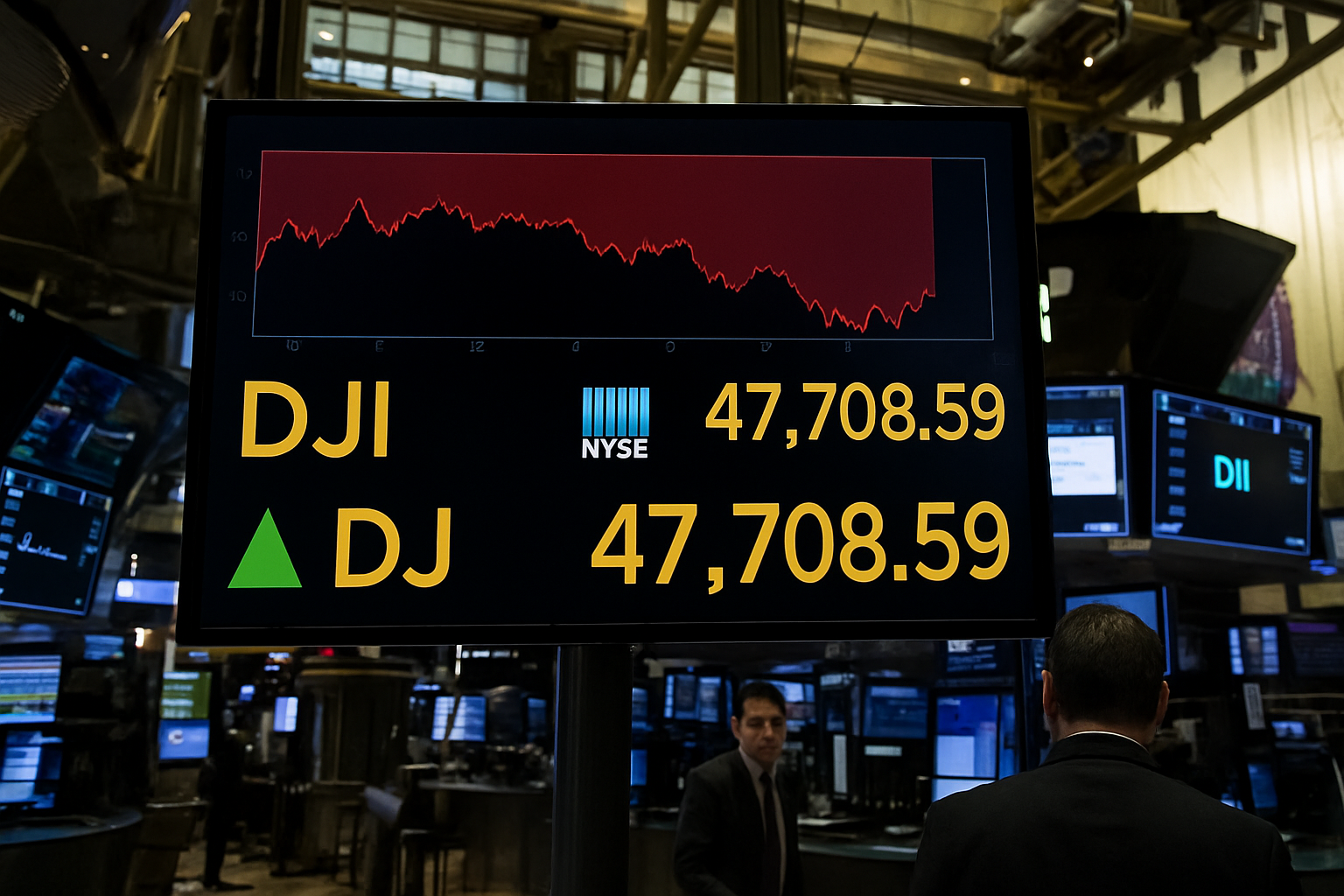
As optimism returns to Wall Street, Dow Jones futures rise.
Pre-market contracts linked to the Dow Jones Industrial Average (DJIA), a benchmark of 30 significant American corporations, are referred to as “Dow Jones stock futures.”
Investor interest in DJIA-linked futures has increased recently, suggesting that the regular market may be about to open. This blog explores five key factors that are influencing that momentum right now.
1. Good Corporate Performance & Tech Earnings Dow Jones stock
Market sentiment is still being improved by tech giants announcing strong results. For example:
- Earnings from big companies like Apple Inc. and Amazon.com, Inc. reportedly contributed to the rise of Dow-linked futures and the wider indexes.
- “Dow Jones Futures Rise, AI Stock Extends Breakout; Tesla, Google, Apple, Tesla Flash Buy Signals,” reads one comment.
Futures markets are buoyed by this better-than-expected corporate performance, which points to a higher opening for the DJIA and associated indices.


2. Geopolitical Optimism and Trade Dow Jones Stock
Tensions over international trade have significantly impacted investor sentiment. However, recent events suggest easing, which has benefited futures:
- According to an article, expectations for a truce in the trade dispute between the United States and China caused futures to rise.
- Conversely, a note noted that futures rapidly declined when trade concerns resurfaced, such as when a court declared the majority of Trump tariffs unlawful.
Futures for Dow Jones stocks typically rise when trade tensions decrease and fall when they increase.
3. Federal Reserve Dow Jones Stock Interest Rate and Inflation Signal
For futures markets, monetary policy is still crucial:
- As markets factored in a potential Fed rate cut, futures increased.
- On the other hand, futures have slightly declined when the Fed issues hawkish signals (such as “another cut is not a foregone conclusion”).
A dovish stance tends to boost futures because high interest rates increase the discounting of future earnings (and vice versa). For Dow Jones futures, changes in inflation data or the Fed’s position are therefore very important.


4. Global Activity & Economic Data for Daw Jones Stock
Futures react to global macro statistics and activity in addition to U.S. corporate data:
- According to a recent article, U.S. stock market futures stopped rising in anticipation of a significant inflation report.
- When trade expectations waned, futures (including Dow) fell precipitously, according to another source.
Releases such as the Producer Price Index (PPI), employment figures, or worldwide manufacturing data can therefore have a big impact on Dow Jones stock futures.
5. The Impact of Technical and Market Structuring on Dow Jones Stock
Technical aspects and market-structure components are also important, in addition to news and macro data:
- The futures market is a reflection of hedge flows, liquidity, and sentiment. Futures behavior is a key indicator of direction for the $1.2 trillion market.
- Live quotes demonstrate how closely traders around the world monitor “mini” Dow futures contracts.
Futures can therefore serve as a leading indicator of the opening or behavior of mainstream stock markets, such as those that underpin the DJIA. For instance, the DJIA may open strongly if Dow Jones Stock futures are significantly up overnight; conversely, if they are down, it may indicate weakness in the future.
Present Situation & Things to Keep an Eye on
According to the most recent data:
- Thanks to trade hopes and tech earnings, Dow futures are slightly up.
- Risks still exist, though, as hawkish Fed remarks, trade escalations, or inflation surprises could slow momentum.
- Keep an eye on this week’s key earnings reports, Fed member speeches, inflation/PPI releases, and any trade war headlines.


Good but Not Promised
In conclusion, tech strength, easing trade concerns, and expectations of monetary easing are the reasons why the Dow Jones stock futures are currently showing positive signals. However, there are risks along the way: a reversal could be brought on by unexpected policy changes or macro headwinds. Monitoring futures provides traders and investors with a head start on the opening or trend of the larger market.