Cyberattack on Collins Aerospace Disrupts Operations at Major European Airports, Including Heathrow
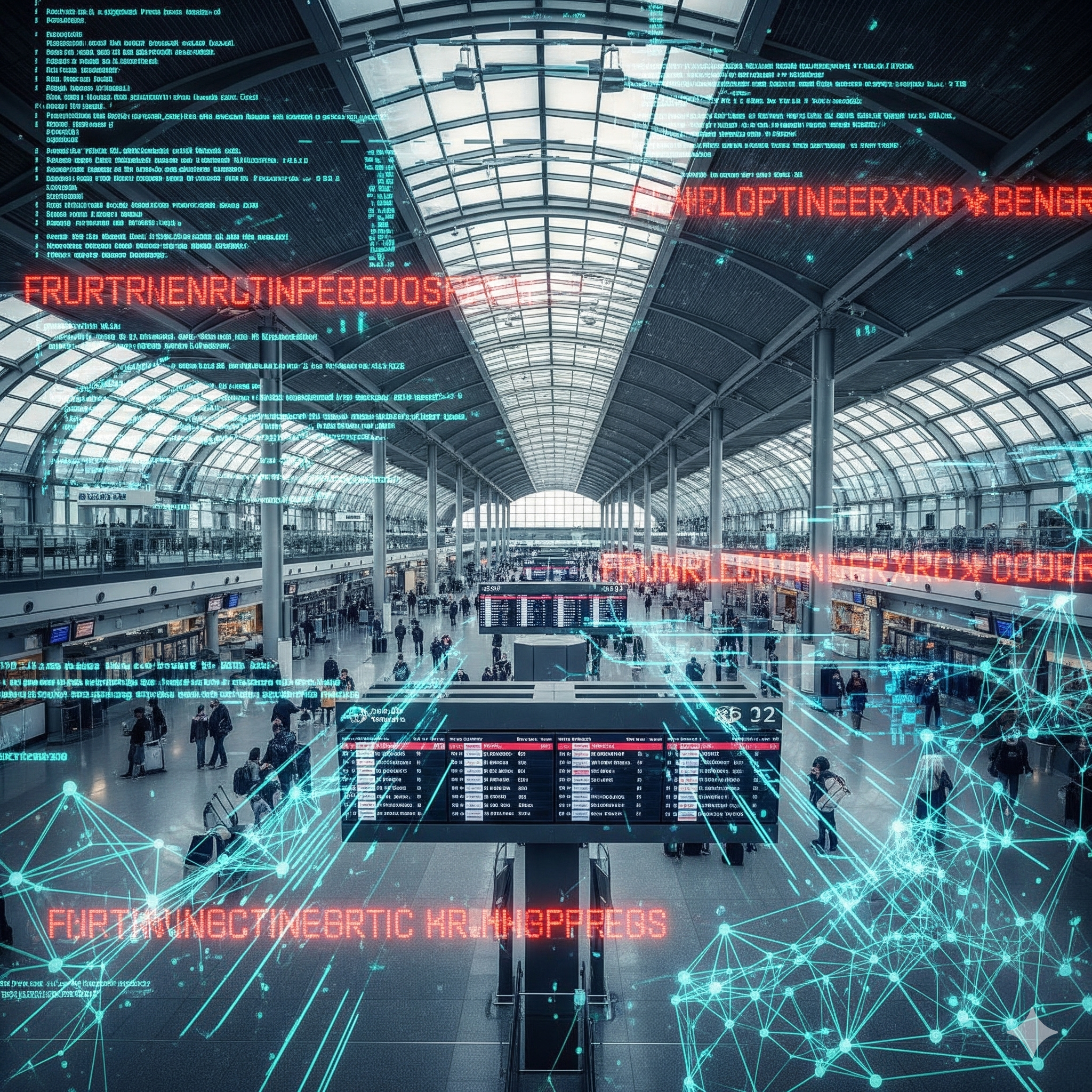
Operations at a number of significant European airports, including London’s Heathrow, the busiest airport on the continent, were disrupted on Saturday by a Cyberattack on Collins Aerospace, a supplier of check-in and boarding systems for international airlines. Numerous flights were cancelled or delayed as a result of the cybersecurity incident. Citing a “technical issue” in Collins’ software that impacted electronic check-in and baggage handling systems, Heathrow alerted travellers to possible disruptions.
According to reports, RTX, the company that owns Collins Aerospace, said in a statement that it had discovered a “cyber-related disruption” to its software at a few airports, but did not specify which ones. “The impact is limited to electronic customer check-in and baggage drop and can be mitigated with manual check-in operations,” the statement said. It also stated that it was trying to resolve the problem as soon as possible.
Cyberattack on Collins Aerospace Causes Major Disruptions at Heathrow, Berlin, and Brussels Airports
Cyberattack on Collins AerospaceCyberattack on Collins Aerospace

Heathrow Airport posted a message on X, formerly Twitter, saying, “We advise passengers to check their flight status with their airline before travelling, while the provider works to resolve the issue quickly.” “Please arrive no earlier than two hours prior to a domestic flight or three hours prior to a long-haul flight. There are more coworkers on hand to help and minimise disruption in the check-in areas. We regret any inconvenience this may have caused.
In a post on X, British Transport Minister Heidi Alexander stated that she is aware of a problem that is affecting airline check-in and boarding, which is affecting flights at Heathrow and other airports in Europe. “I’m keeping an eye on the situation and receiving regular updates. Consult your airline before departing if you have a flight at Heathrow today.
According to their respective statements, the attack also had an impact on Berlin Airport and Brussels Airport.
According to Brussels Airport’s website, the attack has rendered automated systems inoperable, allowing only manual check-in and boarding procedures. The incident took place on Friday night.
Cyberattack on Collins Aerospace Triggers Flight Cancellations, Delays, and Heightened Cybersecurity Concerns Across Europe

“This has a significant effect on the flight schedule and will regrettably result in flight delays and cancellations. In an effort to address the issue as soon as possible, the service provider is actively working on it.
According to the airport, ten flights have been cancelled thus far, and all departing flights have experienced an average delay of one hour.
Delta Air Lines, a U.S. airline, stated that it had put in place a workaround to minimise disruption and that it anticipated little effect on flights leaving from the three impacted airports.
There were no signs that Polish airports were in danger.
According to Krzysztof Gawkowski, deputy prime minister and minister of digital affairs for Poland, there are no threats to the nation’s airports. However, Russian hackers have recently increased their efforts to sabotage the nation’s vital infrastructure, specifically focussing on water and hospital systems. Due to increased tensions with Moscow, the nation now experiences 20 to 50 cyberattacks per day. Warsaw intends to respond by increasing its cybersecurity budget this year to a record €1 billion.
Because aviation depends on well-coordinated systems, cyberattacks on airports are especially disruptive. In an email to Industrial Cyber, Adrianus Warmenhoven, a cybersecurity specialist at NordVPN, wrote, “A single check-in or baggage handling failure doesn’t just create queues – it has a domino effect on flight schedules, connections, and even crew availability.” The current events at Heathrow and other European airports serve as a reminder that cyberattacks in one link in the chain can have an immediate impact on the busiest transport hubs in Europe.
Cyberattack on Collins Aerospace Highlights Supply Chain Vulnerabilities in Europe’s Aviation Sector

According to Warmenhoven, there are a number of reasons why criminals target airports. Hackers who want to extort money from service providers are responsible for some financially motivated attacks. Others are motivated by politics and intended to cause the greatest amount of disruption and damage public confidence in vital infrastructure. Airports are notorious targets, and a well-timed attack can send a message about the vulnerability of vital services while causing chaos for tens of thousands of travellers.
The fact that today’s disruption was caused by a third-party supplier, Warmenhoven continued, “demonstrates how attackers frequently target the weakest link rather than the airport itself. Enhancing resilience entails making sure that suppliers adhere to the same strict guidelines as well as safeguarding airport networks.
In an emailed statement, Rob Jardin, chief digital officer at NymVPN, stated that hostile nation states are using hackers as weapons against Europe, and supply chains are being viewed as a convenient means of causing havoc.
“Criminals are purposefully targeting supply chains to cause the most disruption; we’ve seen this pattern before in retail, automotive, and now aviation,” Jardin said. “Delays for passengers; lost revenue and, more significantly, eroded trust for businesses.”
“Security cannot stop at your own network,” Jardin continued, adding that the lesson is obvious. We need more robust, decentralised infrastructures to prevent critical services from being paralysed by a single point of failure, and all suppliers must adhere to the same strict requirements. To prevent today’s disruption from becoming the norm tomorrow, strong encryption, frequent audits, and backup plans are now crucial.